Little by Little: Each Step Too Small to Fail

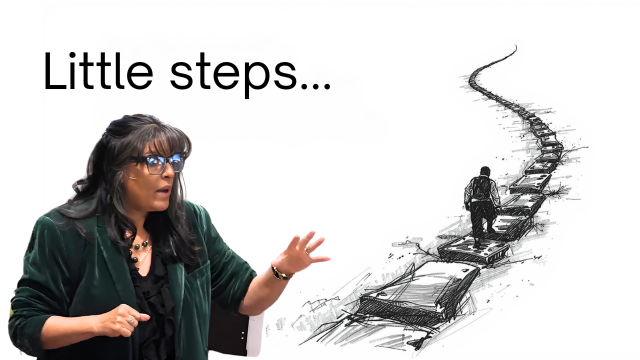
It's captivating to consider our journey and the steps we take to navigate the path ahead. As they say, even a journey of a thousand miles begins with a single step. It reflects a powerful truth: our journeys, whether towards success or away from our true desires, start with seemingly small steps.


Summary

This week we’re reminded that lasting transformation rarely happens all at once. Drawing from Scripture and the story of Israel entering the Promised Land, we’ll discover how God works little by little, inviting us to take small, faithful steps that add up to a life shaped by trust, dependence, and grace.

As we come to the Lord’s Table, we remember that growth doesn’t come through our strength alone, but through daily faith in a faithful God.

Reflection Questions

  1. What is one small, faithful step God may be inviting you to take right now toward the future you hope for?
  2. Where have you been tempted to despise small beginnings instead of trusting God’s “little by little” work?
  3. As you come to Communion today, what does it look like for you to depend on God daily rather than all at once?


Visit our Sermon Library
Subscribe to Clips on YouTube

A Biblical Pep Talk

To illustrate our theme, we'll delve into two passages from the Old Testament: Deuteronomy 7 and Exodus 23. These scriptures serve as a pep talk to the Israelites before entering the Promised Land, reminding them of the power of gradual progress. Before we dive further, let's pray, "Lord, may the words of my mouth and the meditation of our hearts bring glory and honor to You."

Abraham's Journey of Faith

Abraham's story is particularly insightful. He was an ordinary man with extraordinary promises from God. Despite the impossibility due to his and his wife's old age, Abraham believed God’s promise of becoming the father of many nations. This belief, rooted in faith, paved the way for God's plan to unfold.

The Israelites and Their Journey

Yet, the Israelites' escape from Egypt marked only the beginning of their journey, much like our faith in Jesus marks the beginning of ours. The Israelites wandered for 40 years, illustrating that not every journey is straightforward or simple. With Moses and later Joshua leading them, they encountered literal and figurative battles. God promised they would take the Promised Land little by little, gradually overcoming their obstacles.

The Process of Transformation

Becoming who God calls us to be is not easy. We often find it easier to remain in our comfort zones, with existing problems and habits. Like the Israelites, we can feel small in the face of daunting challenges. However, when we rely on God's strength in our weakness, we are too small to fail. God's process involves a gradual transformation: trusting Him step by step.

Applying the Lesson to Our Lives

The concept of achieving victory incrementally is crucial for reaching our dreams. We might despise small beginnings, but they lead to great outcomes. Reflecting on passages from Deuteronomy and Exodus, God promises gradual victories to prevent us from being overwhelmed, teaching us to rely on His daily provision and wisdom.

Embracing Small, Consistent Steps

Consider the book "Mini Habits." The author suggests setting goals that are "too small to fail." By starting with one small action, like a single pushup, we build momentum and confidence. This concept mirrors the biblical lesson of incremental growth and achievement through consistent, small steps.

Conclusion: Little by Little, Great Things Happen

At its core, the kingdom of God thrives on small beginnings that grow into significant impacts. Many fail because they disregard the power of little steps. However, by persisting consistently, little by little, we achieve greatness. As Charles Spurgeon remarked, "Courage, my heart. Go on little by little. For many littles will make a great whole."

I invite you to join this journey of transformation, trusting in God's power, one small step at a time. May our faith guide us to unimaginable achievements. Amen. Let's pray, "Lord God, thank you. Thank you for reminding us of Your presence and strength as we pursue our dreams, little by little."

The key: Change when it's not a crisis...

Don't get stuck with a bad destination only because jumping off a moving train is too dangerous: Choose the future you, now, while the train to 2031 is still moving slowly. Rev Dr Mona Scrivens uses the Bible story of Elijah and Elisha, from 1-Kings 19, to show how


1 Kings 19 invites us to change while life still feels “fine.” This message challenges us to take an honest look at our current momentum, count the cost of following God’s call, and embrace both drastic decisions and steady faithfulness. As we look five years ahead, we’re invited to generate holy urgency now—trusting that God can do exceedingly more as we step forward in obedience.

Reflection Questions

  1. If nothing changed in my life, where would my current habits and decisions lead me five years from now—and do I like that destination?
  2. What drastic action might God be inviting me to take now, even though I’m not in a crisis?
  3. Where do I need to practice steady, faithful obedience so that God can build momentum over time?

Subscribe to Clips on YouTube

We’re in the second part of our series entitled "The Future You." We're looking keenly ahead at five years from now and asking ourselves: who will you be if you continue on your current path? More importantly, who do you want to be? These questions help us evaluate our momentum and decide if we like the direction we're headed. Now is the time to jump off the train if we're not satisfied with our destination.

A Different Kind of Resolution

This isn't your typical New Year's resolution—not something that can be accomplished in just twelve months. Instead, I'm talking about change in the absence of crisis. Our guide today is a story from the Old Testament, about a man named Elisha, whom God called through the prophet Elijah.

Drastic Action: Lighting the Fire for Change

Change requires drastic action, something Elisha demonstrated vividly. Elijah came to inform Elisha that he was to be God’s next prophet. Astonishingly, Elisha left behind an immense inheritance to follow him, signifying a powerful decision to embrace a new life. This kind of drastic action is essential to ignite the change we want to see.

Why is drastic action necessary? It's the spark needed to get the fire going. Change is hard due to inertia—everything, including us, wants to keep doing what it’s already doing. But drastic steps, like fasting or distancing yourself from harmful relationships, tell the universe and yourself that you mean business.

Steady Progression: Keep Pouring Water

Once the spark is ignited, what follows is a steady progression—a lesson taught through Elisha’s 18 years of service to Elijah. During this time, Elisha's role was as simple as pouring water on Elijah’s hands—years of behind-the-scenes work that laid the foundation for his future.

No great thing happens overnight. Real change comes through consistency. It’s about making the right choices, day in and day out. Remember, we're after sustainable transformation, not a quick fix.

Momentum: Becoming Unstoppable

Ultimately, when drastic action is followed by steady progression, we build momentum, where the compounding effect of our efforts starts to pay off. This is when change becomes not only sustainable but unstoppable.

Consider an orange and a toilet paper roll: if we take drastic action to remove the pedestal, the orange falls straight down, driven by gravity—that's momentum. It illustrates the power that can be unleashed when the right things are in place.

Conclusion: The Power of Change in Jesus' Name

Let us pray that we have the strength and courage to embrace and act on these messages, not just today but in the weeks to come. With God, all things are possible. We can become the people He has called us to be. Amen.

Are you ready for your coming life?

It's human nature to overestimate what we can do in one year, and underestimate what can do in five. A consistent, steady approach wins. Rev Dr Mona Scrivens launches a new sermon series: 'The Future You.' Learn to make decisions today that will lead to transformative, long-term, change. Learn how our current actions, habits, and spiritual discipline can significantly shape your future self. Dive deep into scripture with her and discover how to stay 'up and awake' to what God is doing in your life.

Subscribe to Clips on YouTube

Summary

In this opening message of The Future You series, we’re invited to lift our eyes beyond short-term thinking and consider the long, faithful obedience that forms our character, our faith, and our lives.

Rooted in Romans 13:11–14, this sermon reminds us that time is precious, habits matter, and the “ways we let in become the ways we are set in.”

With hope, honesty, and practical wisdom, we’re challenged to wake up to what God is doing and intentionally partner with Him in becoming who He’s calling us to be.

Reflection Questions

  1. When you picture yourself five years from now, what hopes or concerns come to mind—and what daily choices are shaping that future?
  2. What “ways” (habits, reactions, priorities) are currently forming your life?
    Are they drawing you closer to God or pulling you away?
  3. Where might God be inviting you to practice steady, faithful consistency rather than short bursts of intensity?

I am thrilled to introduce our new sermon series titled "The Future You." Today, I want to take you on a journey of self-reflection and anticipation. Picture your age as a giant number, like one of those big balloons. Now, mentally add five years to it. Visualize who you could become. For instance, if you're like me and currently 45, then envision yourself at 50. Or add 10 years. The goal is to be excited about what lies ahead and to believe in a future that God has already prepared for you.

Thinking Long Term

In the hustle and bustle of planning for a new year, it's easy to think small. Often, we underestimate what we can achieve in the long term while overestimating our short-term capabilities. Many of us, especially in younger generations, lack the commitment to stick with something long enough to see real impact.

Consider ministry as an example—the average pastor stays at a church for just 3.6 years. It’s challenging to make a lasting impact in such a short time. This phenomenon isn't unique to ministry; it echoes in relationships and other aspects of life. We tend to bail out when things get tough instead of hanging in there for the long haul.

Looking Ahead to 2031

I challenge us to ask ourselves: Who could I be in 2031? If we commit now, trust in God, and stay the course, 60 months from now could reveal a drastically transformed version of ourselves. But what goals and aspirations should guide us from now until then?

Setting Goals for the Next Five Years

Let's consider some positive possibilities over the next five years. You could become fluent in a new language using tools like Duolingo. Attaining a degree or learning a trade, mastering a sport, or reading 60 books are all achievable targets with dedication and time. Let’s not forget about growing spiritually—spending time with God, memorizing scripture, or simply transforming your soul could create a profound shift in your life.

On the contrary, poor choices could result in negative outcomes: unresolved divorces, prison sentences, addictions, and financial troubles, all of which could develop over five years. The time between now and five years down the line is enough for significant change, either constructive or destructive.

The Ways You Let In

Consider the philosophy: "The ways you let in are the ways you are set in." Over the next five years, our decisions shape who we become. Our daily routines, how we handle conflict, manage money, and engage with others speak volumes about our values and priorities. These patterns, once ingrained, define our character.

Regular, small actions often surpass brief bursts of intense effort. A study on sunscreen use illustrates this beautifully. Individuals who practiced daily, consistent care—applying low SPF sunscreen regularly—looked significantly less aged than those who used high SPF sporadically. Life works similarly; consistent effort trumps short-lived intensity.

The Future You: A Mirror of the Present

As you ponder the future, remember that it's a reflection and amplification of the present. If you're kind now, you'll likely become kinder. If you're disciplined, those habits will deepen. Conversely, negativity intensifies too. To cultivate a future you’re proud of, make choices today that align with where you want to be.

Commit to Continued Growth

Conclude this exploration with resilience and hope. This series invites you to engage fully with each message. Approach it with measured determination rather than hurried enthusiasm. Understand that substantial, meaningful change takes time and consistency.

Finally, recognize life’s brevity and importance. Decide today who you want to become, and start living intentionally. Amen.

Let us pray: Father God, thank you for your word, which guides every aspect of our lives. Help us apply what we've learned to make decisions that glorify and honor you. In Jesus' name, we pray. Amen.

God's Interruptions are a pain... embrace them anyway

sermon by Nobington Murambadoro 2025-12-28
Joseph and Mary's "betrothal" was a binding agreement that entailed serious life planning... which Mary's pregnancy & Jesus's birth turned upside down... Rev Nobington Murambadoro delves into the birth of Christ from Joseph's perspective. Highlighting Joseph's obedience to God amidst confusion and societal pressures.

Subscribe to Clips on YouTube

As we approach the end of the year, I find myself reflecting on the story of Joseph and Mary, a narrative that is central not only to the historical account of Christ's birth but also to our own personal journeys. The birth of Christ, foretold by prophets like Isaiah, is a testament to God's grand design, even when it interrupts our own well-laid plans. This post aims to delve into how Joseph's response to divine interruptions is a lesson for us all.

The Binding Agreement of Betrothal

From my perspective, understanding the concept of betrothal through the lens of different cultures offers intriguing insights. For instance, in some cultures, like my own African context, betrothal involves a binding agreement akin to what Joseph and Mary experienced, underscoring the seriousness and commitment expected.

When I proposed love to my wife, it wasn't just a casual decision; it required thoughtful engagement and a shared vision of our future. We had to agree to the proposal and solidify it through traditional practices, such as the payment of the bride price, a public declaration of our commitment. This process, much like Joseph and Mary's, signifies a binding union not to be taken lightly.

Joseph, A Man of Character

Joseph's predicament, finding Mary pregnant before they had been formally married, placed him in a significant moral and social dilemma. Initially, Joseph planned to divorce Mary quietly, a decision that spoke volumes about his character. Though he felt betrayed and might have suffered the disgrace of it all, he chose to act privately rather than expose her publicly.

I often think about how circumstances can test our character, much like a coin with two sides. They either reveal the strength of our integrity or expose our hidden flaws. Joseph's quiet dignity and obedience to God's will are reminders of what it means to uphold one's virtues, even amid life's challenges.

God's Fulfilled Prophecy

As Joseph considered his next steps, an angel appeared to him in a dream, reassuring him of God's plan. This divine message highlighted that Mary's pregnancy fulfilled a prophecy — that of a virgin bearing a son named Emmanuel, meant to bring salvation to the world. Joseph's acceptance and obedience demonstrate his relationship with God.

In my own life, maintaining a relationship with God helps me understand and accept the unexpected events that occur, trusting in a greater plan. As Paul said, "It is not I who live but Christ in me," reinforcing that only in a deep relationship with God can we find the strength to perform seemingly impossible tasks.

Reflecting and Renewing Our Relationship With God

Just as a romantic relationship requires nurturing, so does our relationship with God. Taking the time to reflect, pray, and immerse ourselves in God’s word is crucial, particularly as we make resolutions for a new year. This season is an opportunity to recommit to nurturing our spiritual connection.

Just like I love taking time to nurture relationships, whether through shared experiences or simple acts of kindness, the same applies spiritually. Regular reflection and renewal foster growth and understanding, aligning us with God's intentions.

Embracing Divine Interruptions

As we conclude this year and turn our eyes toward 2026, let's embrace the divine interruptions that come our way. They are reminders that while our plans might fall apart, God's presiding plan prevails. I have experienced moments where my own plans were displaced by a higher purpose—an experience that remains humbling and enlightening.

I hope this Christmas season challenges us to welcome these divine detours, just as Joseph did, with faith and trust in God’s perfect design. Let us be sensitive and willing to accept that God's plans will ultimately lead us to where we are meant to be.

Conclusion

May the Lord bless you and keep you. May He make His face shine upon you and be gracious to you. May He lift up His countenance upon you and give you peace, now and into the year ahead. In Jesus' name, Amen.

To give, or to care... Why it matters...

Last year, North Americans spent over $964 billion on holiday purchases; things often forgotten by February. The wise men show that Jesus is God's gift to the world. 2,026 years later, we still remember. Shift your focus from the transitory to the permanent and change your life.


This week in our Advent series, A Nativity Story, we turn our attention to the Wisemen. In our video, the modern Magi arrive expecting a pile of presents for Jesus—only to discover that the greatest gift is not something we give, but Someone we’ve received. Mary gently reminds them (and us): “It’s Jesus who is the gift… give Him your heart.”

Today we’ll explore what authentic worship looks like through the journey of the real Magi—recognizing Jesus’ worth, responding with true worship, and offering God the one gift He desires most: our hearts.

Reflection Questions:

  1. What does it practically look like for you to “give Jesus your heart” this Christmas?

  2. Where might God be inviting you to offer Him something costly—not out of duty, but love?

  3. How would your daily life look different if you lived as a grateful recipient of God’s indescribable gift?


Subscribe to Clips on YouTube

This holiday season, I want to explore what it means to truly give, focusing on the ultimate gift that needs no wrapping: ourselves.

The Lesson from the Modern Wise Men

Imagine if the wise men of today showed up at the nativity scene only to find no mountain of presents. Instead, they grumble about shipping delays and overpriced items, making every complaint imaginable. But Mary, ever wise, reminds them and us: It's Jesus who is the gift, and what He desires most is our hearts.

Authentic Worship: Recognizing the Gift

In Matthew 2:1-2 and 10-11, we learn about the journey of the original Magi. These were not casual tourists but scholars who traveled far based on the guidance of a celestial sign. They didn't just bring care packages; their journey was a pilgrimage of worship. They recognized Jesus's worth, a recognition that should compel us to re-evaluate our own gifts.

I often wonder if we truly acknowledge Jesus as our greatest treasure. The Magi did, and they showed it through sacrifice and devotion. How does our schedule or our spending reflect our priorities?

The Magi’s recognition of Jesus changed their lives. They knew a King’s arrival warranted a worthy response. How does our recognition translate into our everyday living?

Authentic Worship: Responding with Worship

Psalm 96:8-9 calls us to worship the Lord with offerings and glory due to His name. For the Magi, their gifts symbolized gold for kingship, frankincense for divinity, and myrrh for sacrifice. These weren't arbitrary; each was a theological declaration.

In modern worship, we must avoid focusing solely on the external experience—the lights, the music. I remind myself often that worship should mirror God's worth, not just stir emotions. The Magi came to give, not to receive. Is my worship just a leftover from busy schedules, or is it something more meaningful?

Authentic Worship: Releasing Your Heart to God

To me, authentic worship involves a full surrender of the heart. True worship comes from love and joy, not obligation or expectation. Do we obey because we want to, or because we feel pressured to? When God truly has our hearts, our actions follow from genuine love.

God desires more than our external compliance; He yearns for our innermost thoughts, desires, and values. Giving God my heart means pledging total allegiance and love.

Reflecting the Gift

In 2 Corinthians 9:15, Paul mentions God's indescribable gift. Jesus is that gift, and when we fully grasp this, gratitude overflows into every area of our lives. We don't perform religious acts to earn God's love; we give because we are already recipients of His abundant grace.

Like the Magi, encountering Jesus compels us to take a different route through life. They didn't return the same way they came, and neither should we. This Christmas, let's leave our familiar confines to find Jesus, and let the encounter change us permanently.

Conclusion

In a culture obsessed with perfect moments and material gifts, I invite you to focus on what truly matters this season: giving Jesus our hearts. The Magi got it right—they came to give, not to receive. Let's do the same.

Before you wrap another gift or attend another party, consider what truly giving your heart to Jesus looks like. Ask yourself how living as a grateful recipient of God's indescribable gift could transform your life. Let this Christmas be the one where you let the gift of Jesus change your route forever.

Amen.

There IS a way home

Jesus, the Good Shepherd, seeks out every lost sheep. Jesus lifts us in our weakness, unites us in our diversity, and holds us close to His heart. If you've ever felt lost or unworthy, this sermon offers hope and comfort, revealing that God's love has no limits or conditions.


Sermon Summary

In this week’s message, a wandering sheep, and a crying baby remind us that even when life feels chaotic, our Good Shepherd sees us, seeks us, and carries us close to His heart.

Through Scripture, we discover four beautiful truths of Jesus’ shepherding care: He is the Shepherd who seeks the lost, lifts the weary, unites His diverse flock, and holds us close with unfailing love.

No matter how far we wander or how loud our life becomes, Jesus comes for us—joyfully, tenderly, and with a heart that refuses to give up on any one of His sheep.

Reflection Questions

  1. When have you felt like the “wandering sheep,” and how have you sensed Jesus seeking you in that season?

  2. What does it look like for you to allow Jesus to carry you instead of trying to walk on your own strength?

  3. Where might Jesus be inviting you to help create unity within His diverse flock?

Subscribe to Clips on YouTube

In the chaos of our world, it is easy for us to feel lost—like wandering sheep. But, thankfully, our Shepherd, Jesus, doesn’t just welcome those who are well-behaved, those who never stir the waters, or those who seemingly have their spiritual act together. He seeks out the wanderers, the questioners, the ones who add a touch of mess and loudness to life. I find profound comfort in this truth, for if we are honest, most of us have been that wandering sheep. We have all been part of the chaos, disrupting the peaceful nativity scene of an ordered faith.

The Shepherd Who Seeks

Our exploration begins with a well-known parable from Luke 15:4-7. Jesus tells the story of a shepherd leaving ninety-nine sheep to find the one that was lost. The likelihood of this scenario would have caused a first-century audience to pause. Losing just one sheep out of a hundred amounts to just 1%—losses that any business-minded person might deem acceptable. Yet, Jesus flips the script to express a different type of valuation. To God, every single sheep is indispensable. Each has a name, a story, and a place in the flock that cannot be replaced.

Shepherding in the first century was not glamorous. It required rough living, tending to sheep that often wandered into danger and could not find their way home alone. Jesus, as our Shepherd, illustrates God’s heart for us. Whenever we wander—as we all do—He searches for us tirelessly, determined to bring us home.

The Shepherd Who Lifts

Isaiah 40:11 paints a picture of a shepherd who carries lambs close to his heart. When a sheep is exhausted or prone to wandering, the shepherd doesn't scold it. Instead, he carries it in a position of honor, near his heart. Sometimes, life leaves us too broken or weary to walk the spiritual journey alone. In those times, Jesus does not leave us behind with an encouraging but distant chant. He picks us up, carrying us with intimacy and care.

What radical love it is—to be carried by Jesus! It is not a sign of weakness; it is intimacy with our Shepherd. We learn His rhythm and begin to breathe in sync with Him, the heartbeat of God falling in time with ours.

The Shepherd Who Unites

The inclusion of outsiders into the flock is a message found in John 10:14-16. Jesus speaks of bringing other sheep, drastically expanding the Jewish audience’s understanding of God’s inclusive plan. Diversity in God’s family may be challenging but is intentional. Our unity comes not from similarity, but from shared connection to the Shepherd.

Jesus calls us to foster unity and to turn away from divisions based on culture, worship styles, or personal preferences. As we help others hear His voice, not ours, we fulfill part of His divine mission.

The Shepherd Who Holds Us Close

Being held by the Shepherd carries profound significance. Deuteronomy 33:27 illustrates God as our refuge, His everlasting arms cradling us with affection and delight. We are treasured, not merely tolerated. His heartbeat becomes our rhythm, and our lives are molded by His love.

Resting in the Shepherd's Care

Reflecting on the Christmas story reminds us that the Shepherd became a sheep to bring us home. As I consider this, I am often speaking to myself, reminding my restless heart of God’s unwavering pursuit and extravagant love.

If you feel like a wandering sheep, know that the Shepherd is looking for you with love, not condemnation. Picture yourself resting on His shoulders, close to His heart. If you have witnessed this kind of love from afar, today could be your day to experience it anew.

Let us pray together, asking our Shepherd to guide, carry, and unite us in His abiding, relentless love. Remember, Christmas tells the tale of a Shepherd seeking His sheep—a story that welcomes each of us home. Amen.

When God whispers, are YOU listening?

We live in a busy, noisy world. Stop. Look. Listen: The loudest, boldest voice is not the one that will actually determine your future. Through the lens of the Christmas story, Rev Dr Mona illustrates how God's presence, found in the simple, ordinary moments, delivers miracle after miracle.

Subscribe to Clips on YouTube


In today’s fast-paced world, we often find ourselves constantly running from one activity to another, with families too busy scrolling through their phone screens, shopping, and attending endless events. Just like many, I sometimes feel overwhelmed with how packed our lives become, leaving little room for wonder or reflection on the extraordinary.

The Noise that Drowns Out God's Voice

As I look around, I see a society that is perpetually distracted. Much like the family I spoke about in my recent sermon, racing past the nativity scene without a glance, it’s easy for us to miss the profound in the ordinary. Gabriel’s frustration about our inability to hear an announcement from God amidst the noise deeply resonates with me. Living in an age where everyone is bombarded with thousands of messages daily, the opportunities for spiritual reflection shrink as there’s always something buzzing to capture our attention. I find myself wondering if I, too, could hear God’s whisper beneath all that clamor.

The Persistent Call of the Quiet Moments

Yet, even in the chaos, there’s Mary’s wisdom that cuts through the noise. She reminds us that while God can command attention with heavenly hosts and miracles, He often chooses a different path. Mary’s calling wasn't announced with trumpets but through a quiet conversation with God’s messenger, reflecting a more profound truth: God often speaks in whispers.

I’m drawn to how God gently communicates in the quiet spaces, like His whisper to Elijah, where his presence was found not in the loudness but in the still small voice — the gentle whisper. I try to remind myself that even as we long for sky-splitting signs of divine intervention, God’s most profound communications may come in frequencies only a quiet heart can detect.

Embracing Stillness in a Loud World

We live in a society operating at maximum volume, often only responding to the loudest, most urgent calls. But what if I, and we all, intentionally built rhythms of stillness into our lives? Not just during designated prayer times but throughout our everyday moments. Five minutes of silence before turning the ignition, or a moment of deep breathing before reaching for our phones, could create sacred spaces where our souls can discern God’s whisper amidst the noise.

The Art of Waiting

Like Gabriel, I often find myself impatient, eager to shake the distracted awake to God's presence. However, Mary reminds me that God’s patience is His steadfast promise. Today’s instant gratification world can make divine delays feel neglectful, but God’s timeline is divine patience. I question if I’m interpreting delay as denial rather than seeing it as an opportunity for growth and understanding.

What if God is using these times of waiting to prepare both you and me for answers that need time to unfold? Our faithful presence during such seasons becomes part of our spiritual journey.

God Among Us: The Ultimate Welcome

When John spoke about Jesus “pitching His tent” among us, he highlighted God’s intentional choice to dwell in the ordinariness of human life. I am in awe of how God chose the humblest beginnings, born in a manger — a choice that transforms social status norms and invites everyone, regardless of their place in society, into God’s embrace. The beauty lies in the accessibility of Jesus’ birth, which invites both the rich and poor alike to approach the manger, breaking barriers and expectations.

Listening for God’s Presence

The question I wrestle with is not whether God is speaking, but am I truly listening? There’s an invitation to tune out distractions and tune into the whispers, to be patient in the waiting, and to invite God into everyday spaces. Whether in moments of solitude or in the emotional chaos of life, God’s presence with us — Emmanuel — pressures us not.

As we journey through this Christmas season, deepening our recognition of God with us, my prayer remains for us to hold space for divine wonders amidst ordinary life. Let’s make room for God’s indwelling presence and create avenues for worship and wonder, regardless of whether He’s speaking through angel armies or a baby’s cry.

Let’s Pray: Father, help us to hear you in both the thunderous and the gentle whispers. May we not miss your presence in the ordinary moments as we navigate the noise of this world. In the name of Jesus, our Emmanuel, amen.