Amberlea Church

Christian Worship, Contemporary Music, Groups for Kids, Youth, Adults

Member of the Presbyterian Church in Canada
1820 Whites Rd, Pickering, Ontario, L1V 1R8
905-839-1383
Church Office: Tue & Thu 9:45 a.m. to 1:30 p.m.
Worship: SUN 11:00 a.m.

  • home
  • Mona's Blog
  • Missions
  • Giving
  • Find Us
  • What we do
    • About Us
    • sermons
    • Family Ministries
    • Leading With Care
    • Community Groups
    • Volunteers
    • Private
    • RightNowMedia
  • Families
    • F.A.C.E.
    • Shelly's Blog
    • KidZone
  • Contacts

...where we often see addition, God sees multiplication...

Expect MORE!

September 21, 2025 by Rev. Mona Scrivens

What I'd like to share today is a message for all who feel as if they're settling in life. At some point, you might've believed that God would work miracles in your life. You had faith, hope, and plans, even dreams of greatness. Maybe you uttered a prayer like Jabez did, asking God to enlarge your territory and bring blessings. Then life went on, and not much seemed to happen, and you started to settle. If this resonates with you, know that you're not alone. Before we delve deeper, let us pray.

Lowered Expectations

For those of you feeling as if you've lowered your expectations of what God might do, whether it's dreams to start a business, become the best parent, or simply to make it through the month, this message is for you. At times, we settle for less and ask God for merely the consolation prize. Maybe you once aspired to be an entrepreneur or the perfect caregiver, but found yourself praying for basic survival. The reality is, you have no idea what God may produce through a single seed planted in faith.

An Old Testament Lesson

Let's talk about a couple from the Old Testament—Abraham and Sarah. Like many couples, they dreamed of having children, but faced heartache when they couldn't conceive. Imagine their painful journey as they waited, watching others celebrate the miracle of life. At one point in Genesis, God promised them they would become the parents of nations. Despite the promise, at least a decade passed with no child. Abraham's doubts surfaced, and he settled, lowering his expectations. Just give me one son, he thought. And yet, God had a vision of multiplication far beyond what Abraham could imagine.

From My Own Experience

Reflecting on my own journey, I recall being the only brown girl in my school when I received a little red Bible from the Gideons. I didn't read it right away, not understanding its value until years later. As I read it, little did I know a seed was being planted within me. I was once asked to teach Sunday school, unprepared, yet just a few steps ahead of the children I taught. Decades later, I received a message from one of those kids, now a missionary in India, spreading faith. You see, the seed planted unknowingly had grown into a flourishing tree.

More Than Enough

Starting today, I want us to ponder this: when it comes to faith and God’s blessings, where we often see addition, God sees multiplication. We might plant a single seed and witness God’s incredible, exponential return. Just as a seed must take root before bearing fruit, so must our faith endure before flourishing. Despite the unseen, God works tirelessly to nurture our seeds of faith.

Conclusion: Exceedingly Abundantly More

As we walk forward, understand that God's promises are unwavering and abundant. They arrive when the time is right, bringing growth, salvation, and abundant grace. If you've begun to lower your expectations, I encourage you to rekindle the belief that God, in all His power, can yield immeasurable results through a single, sincere act of faith. Every life—your life—is a seed capable of unfathomable impact. We have no idea how our devotion and belief can touch countless lives and uplift countless spirits. Amen.

Let's keep planting those seeds in faith, and watch what miracles unfold.
September 21, 2025 /Rev. Mona Scrivens

Click to see video on YouTube

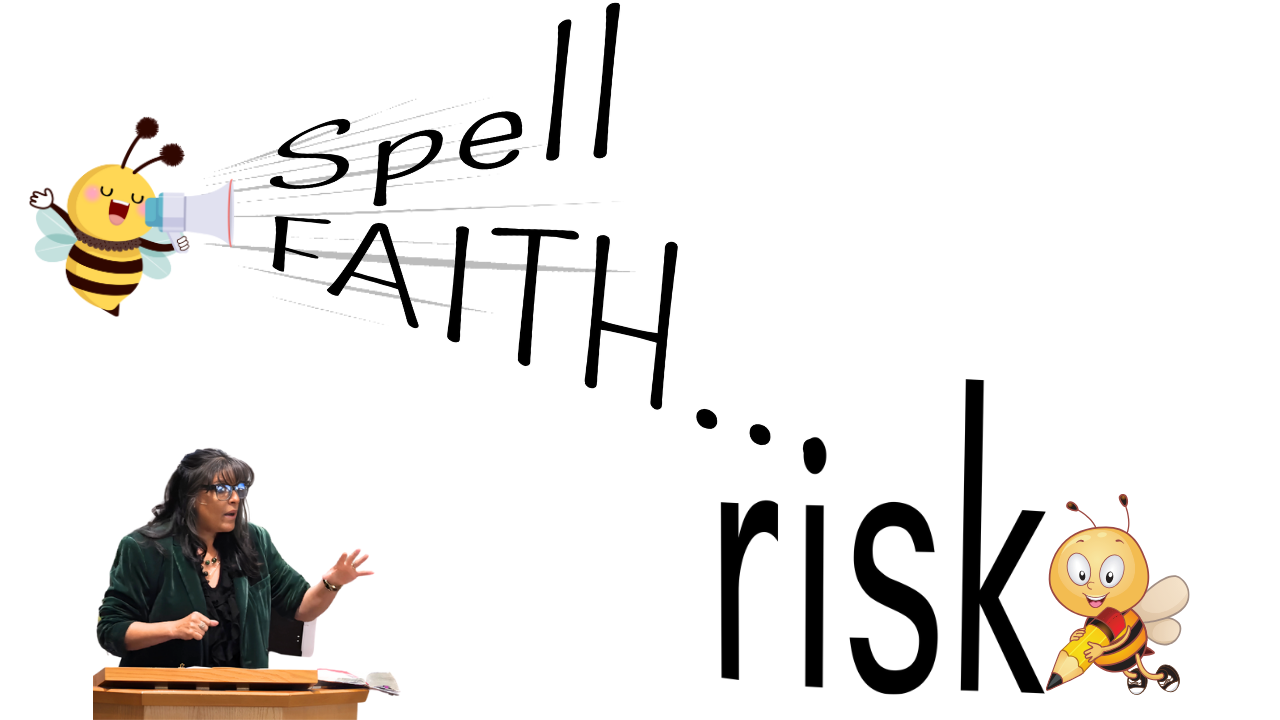
How do you spell "FAITH"?... R-I-S-K

September 14, 2025 by Rev. Mona Scrivens

Introduction

Good morning, everyone. Whether you're visiting us for the first time, a regular, or joining online, I'm thrilled to have you with us today. Recently, I stumbled upon a fascinating film, "Aquila and the Bee," revolving around spelling bees, which led me to muse over the origins of these competitions and how they began in 1808. This got me thinking about what word God might ask all believers to spell in a divine spelling bee, and I believe the word would be "faith."

Faith Is Essential

In our walk with God, faith is an indispensable component—it's the oxygen of our spiritual relationship. As the Apostle Paul wrote to the church in Ephesus, "For it is by grace you have been saved through faith." Faith is not an optional characteristic or a one-time class; it's a dynamic force requiring action. It's an essential part of our spiritual journey and is something that, although a noun, often functions best as a verb.

The Call to Risk

Faith pushes you beyond comfort zones, urging you to take risks. It may prompt you to leave a stable job, relocate to unfamiliar places, or make sacrifices that might not make sense to others. In essence, faith is spelled R-I-S-K. As we reflect on biblical narratives, it's clear that everyone who truly walked in faith took risks.

Peter Walks on Water

This brings us to the classic biblical story of Jesus and Peter walking on water. While initially not impressed by Jesus walking on water, I was intrigued by Peter, the impulsive disciple. Despite Peter's flaws, he managed to walk on water, demonstrating that even with little faith, God can work wonders. The real measure of faith lies not in its size but in its focus—on Jesus.

The Risk-Revelation Principle

When Jesus called the disciples, they took a risk, leaving behind their lives without fully knowing who Jesus was. The principle here is that God often grants revelation after the risk. Jesus revealed Himself slowly, allowing the disciples to grow in understanding over time. Like Matthew, the tax collector, who might have cataloged Jesus' miracles, we witness that God's revelations often follow steps of faith.

Trusting Amid the Storm

The disciples once faced a storm as they obeyed Jesus' command to sail across a lake. Even though Jesus wasn't in the boat with them, He watched over them from afar. Sometimes, our own storms stem from obedience, not disobedience. Trust Him in these times, for even when we can't see Jesus, His eyes are always on us.

Courage is Within Your Reach

In their fright, Jesus came to the disciples walking on water, calmly asserting, "Take courage. It is I. Don't be afraid." This is a profound reminder that courage is always within our grasp. Even when previous revelations are unavailable, the familiarity of His presence provides comfort and strength.

The Cost of Comfort

In the face of adversity, resist the temptation to retreat to safety. Stay the course because the Savior who calls you also sustains you. Take the risk, for it is often on the other side of risk where God reveals His power and purpose.

Conclusion

Let us pray for strength to embrace faith and take risks. Trust that if God sends us, He will not only strengthen and sustain us but reveal more of Himself as we step out in faith. Amen and Amen.

May you find encouragement in this message to embrace the risks associated with your faith journey, trusting that God will reveal His plans along the way.

September 14, 2025 /Rev. Mona Scrivens

Unity within the church doesn't stem from uniformity. It is the blending of our gifts, traditions, and personal strengths that make the body of Christ strong and vibrant.
So what's your gift?

YOU matter BECAUSE you're different

September 11, 2025 by Rev. Mona Scrivens

Hello everyone,

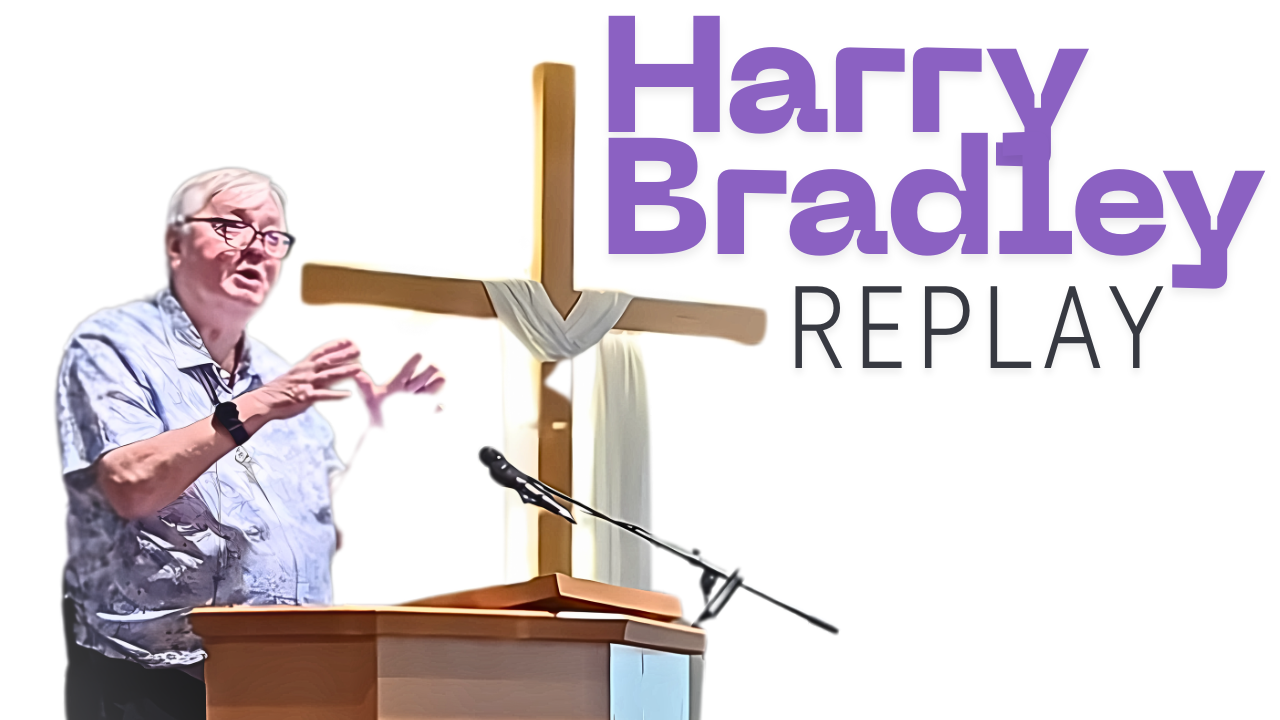
It's wonderful to connect with you today and share insights from my recent message at Amberlea. I'm Harry Bradley—or just Harry, as I often like to be called. I recently returned to speak at Amberlea, a place that feels like home to me, surrounded by many familiar faces and some wonderful new ones. Thanks to Maxene for the kind introduction.

The Art of Introduction

Allow me to start with a personal anecdote about introductions. When I first moved to Scarborough from Hamilton, where I had spent nearly 12 years, the congregation at Knox Church faced a little dilemma in introducing me to the community. The church signage didn't have enough letters to spell out my full title. Instead of opting for a formal title, I jested about simply putting "nice guy" on the board—we could all use more nice guys in the world! But, as always, tradition persisted, and I became the "moderator."

The Body of Christ: Together in Diversity

Today, I want to dive into a topic that has been close to my heart, reflecting on Paul's first letter to the Corinthian Church. In this letter, Paul uses the powerful metaphor of the church as the body of Christ—a body composed of many diverse yet equally essential parts. This metaphor is more than a mere analogy; it is a model for how we, as Christians, are called to interact and function together.

Gifts of the Spirit: Defined and Embraced

Paul speaks extensively about the "gifts of the spirit"—unique talents granted to each of us by the Holy Spirit for the common good. These gifts include wisdom, knowledge, faith, healing, miraculous powers, prophecy, discernment, speaking in tongues, and interpretation. Just as these gifts are varied, so are the roles within a body. We may be as different as the organs and limbs of our physical body, yet each plays a crucial part in the body's overall well-being.

option: open in a new tab

Unity Is Not Uniformity

A key takeaway from Paul’s message is that unity within the church doesn't stem from uniformity. Too often, Christian groups insist on homogeneity, believing that true unity requires everyone to agree on every detail. However, true unity, as Paul suggests, is found in our diversity—the blending of gifts, traditions, and personal strengths that make the body of Christ strong and vibrant.

Every Part Matters

Paul challenges us not to undermine any part of the body, regardless of how small or seemingly inconsequential it may appear. Each element has its place and purpose. Whether it's the visible roles like preaching and singing or the quieter acts of service, like the person who calls a fellow congregant during the week, every contribution is vital.

Cooperation Over Competition

The church thrives when we learn to cooperate rather than compete. As Professor Harvey Cox noted, even among Christians, discussions can often highlight differences rather than common ground. It's crucial that we find unity by working together to present a unified message of Christ's love to the world.

Reflecting on Our Blessings

In my journeys and after retiring from pastoral ministry, I’ve had the privilege of visiting diverse congregations, each with its style and customs. From formal and reflective services to those bursting with lively music, I've learned that God's work is manifest in many beautiful ways.

Conclusion: Sharing God’s Love

So, what's a body to do? Embrace our divine gifts and work harmoniously as parts of a whole. Let us go out, exercise our God-given talents, and unite as one body in Christ. The world will see our Christian witness, not as a fractured and divided entity, but as a harmonious family bound by love and purpose. Together, working through our many different ministries, we become a beacon of God’s love in a world too often filled with division.

I encourage each of you to carry these reflections into your hearts, cherishing the diversity and unity that form the body of Christ.

To God in Christ be the glory.

Amen.

September 11, 2025 /Rev. Mona Scrivens

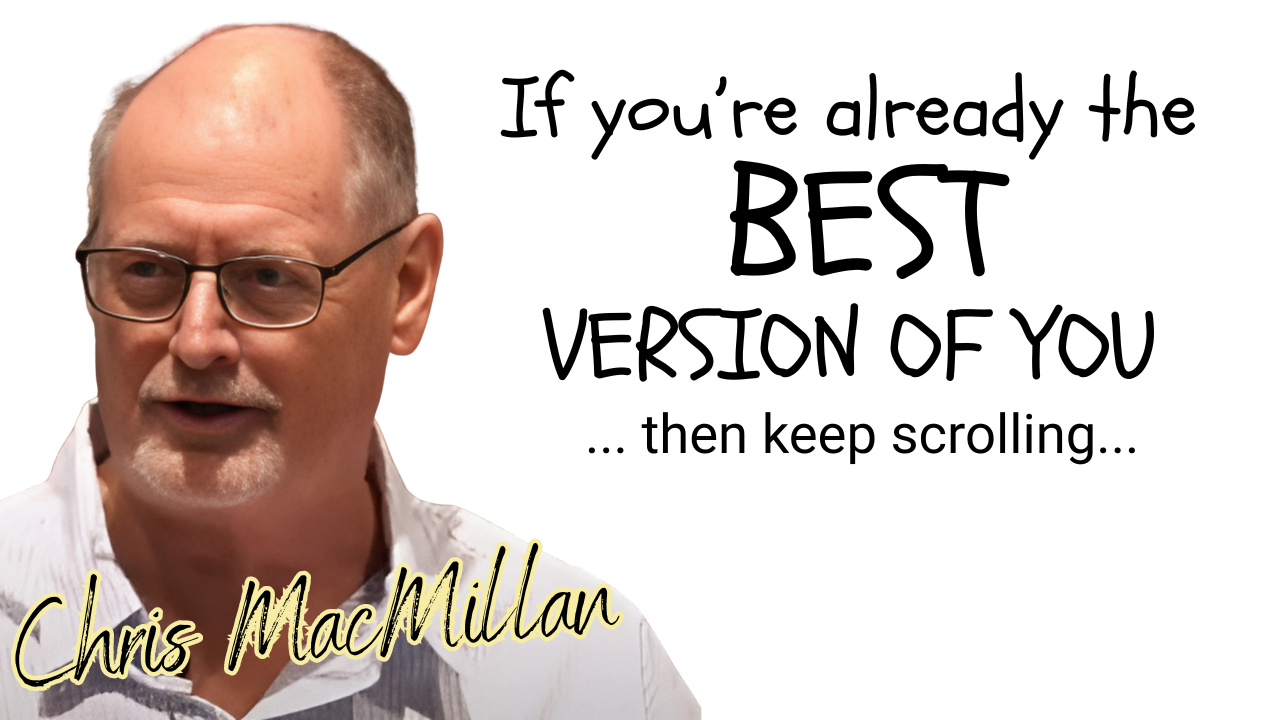
If you are already the best possible version of yourself, go on to the next announcement. Otherwise, this message is for you...

Already Perfect? Then keep scrolling...

September 11, 2025 by Rev. Mona Scrivens

Hello and good morning to everyone here and online.

I want to share a story about my friend Tom, who I’ve known since we were ten. Our friendship and faith journey have been intertwined throughout the years. When he was in his fifties, Tom chose to attend seminary classes and became qualified to serve as a lay minister, often providing pulpit supply across Central and Southern Ontario. While Tom is busy with his calling, I find myself here today, once again called to share a message after nearly half a century since I last stood at a podium. Let's explore the path to becoming the best version of ourselves.

Why Are We Here?

The church is not just a building; it’s a place for worship, fellowship, and refuge. People outside the church, and sometimes the media, might have misconceptions about us, which we’ll address later. But first, let's pray for guidance as we discover our purpose both individually and collectively.

The Best Version of You

Today, let's ponder the idea of being the best version of ourselves. Although I speak mainly from my own experience, I hope some insights resonate with you. If you believe you’ve already reached this state, congratulations! If not, join me in exploring three questions to guide our discussion.

Am I a Good Person?

Looking at the news can make us question human goodness, but it’s essential to remember that everyone has goodness inside. Civilization's history, from the Greeks to the Ottomans, shows a cycle of dominance and decay. Where does Christianity fit in today? It's a discussion for another day, but it starts with reflecting on personal goodness.

I admit I’m flawed, and candidly, those close to me could attest to it. But embracing our imperfections while striving to meet biblical standards like the 10 Commandments or Proverbs 10:9 is what matters.

Who Is My Role Model?

Our world is filled with potential role models, from celebrities to social media influencers. Their images can create unrealistic expectations of success and happiness. Let me tell you about Alice Cooper—yes, the rock star—who found redemption through faith and sobriety. Yet, for the ultimate role model, we look to Jesus.

Who Can Fix It?

Jesus not only serves as the perfect exemplar but also provides the answer to “Who can fix it?” God is the solution, offering love and forgiveness to all. John 3:16 reminds us of the profound love God holds for us, sacrificing His son for our salvation.

Prayer: The Key to Transformation

Communication with God through prayer is our key to accessing divine guidance and grace. Jesus has opened the door for this communion, allowing us to grow spiritually and become the best versions of ourselves.

Conclusion: Striving Together

Living and worshipping in community gives us strength. We can support each other in our journey of faith, acknowledging our weaknesses to fortify our spiritual witness. Let’s strive together to embrace the best versions of ourselves.

Amen.


September 11, 2025 /Rev. Mona Scrivens
  • Newer
  • Older